

Controlled environment agriculture
Pilot programmeA polyhouse that manages itself
I-Grow is sensor-driven automation for protected cultivation. It holds irrigation, fertigation, temperature, humidity, vapour pressure deficit, photoperiod and CO₂ where the crop needs them — and warns you about pest and disease before you can see either.
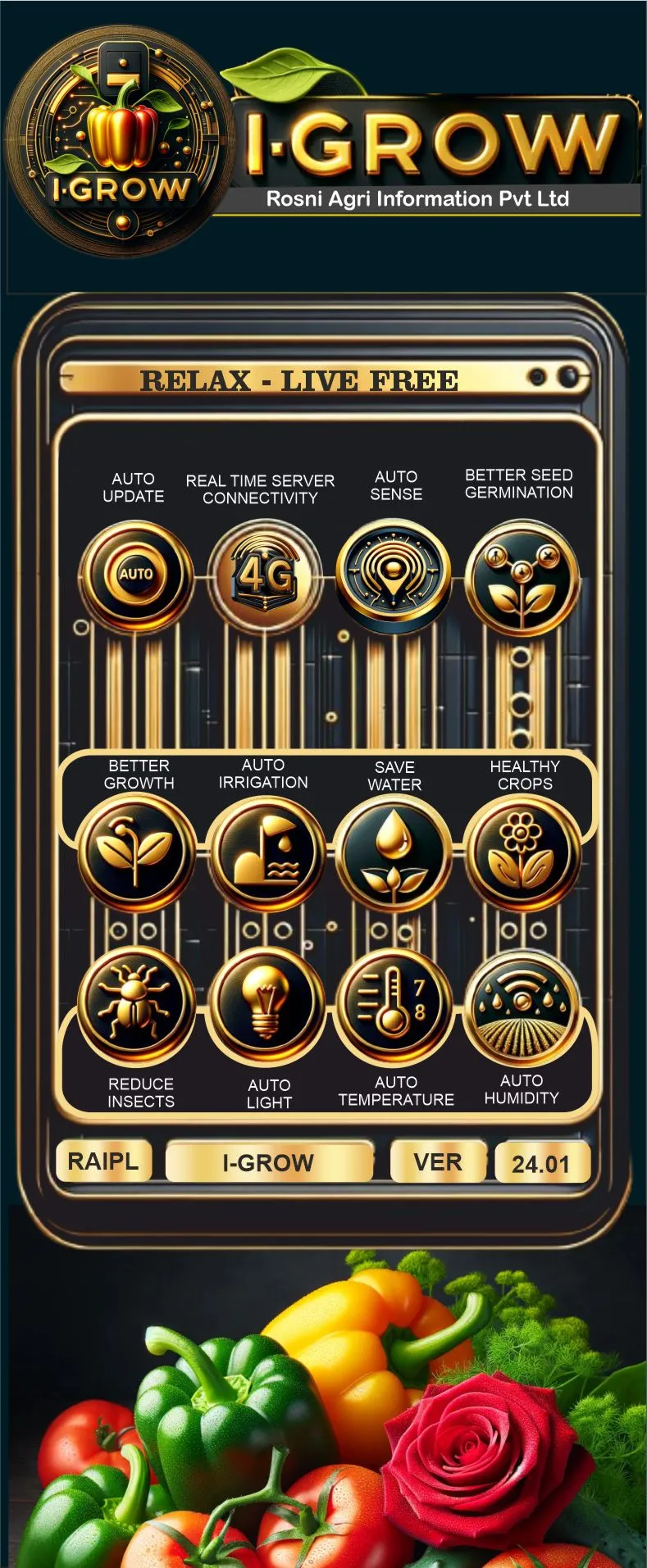
I-Grow controller, version 24.01.
The problem
Most polyhouses fail for reasons that have nothing to do with the structure
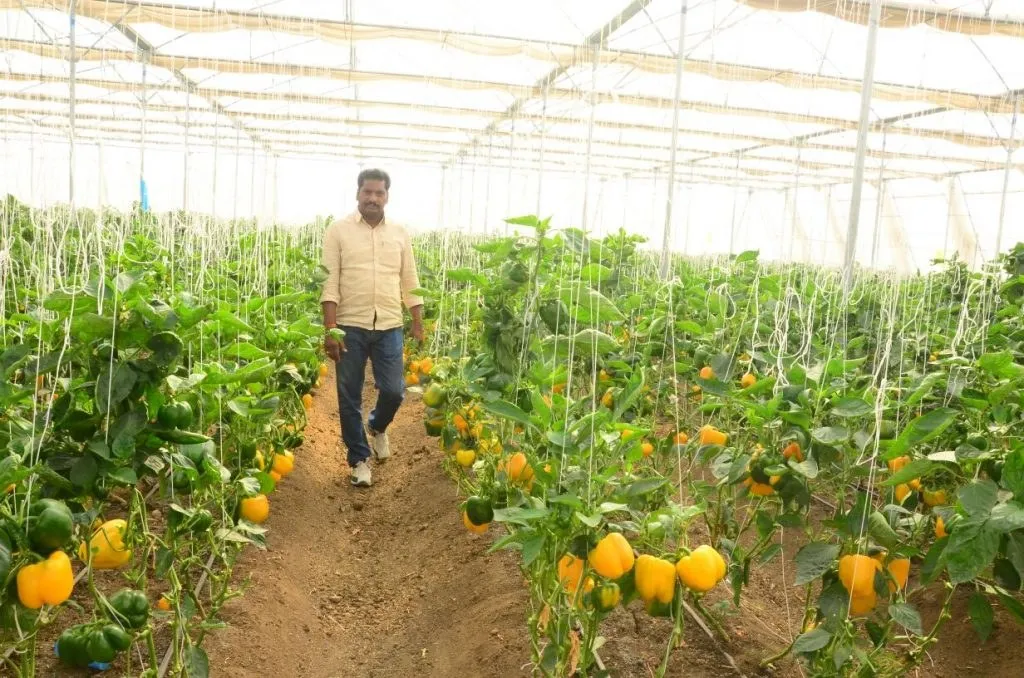
Protected cultivation should be the most profitable acre on an Indian farm. Government support is substantial and the crops are high value. Yet a significant number of growers abandon the project within three years and return to open-field farming.
- 01
Choosing
The wrong crop, the wrong variety, the wrong sowing date, or a structure that is inefficient for the site.
- 02
Financing
Finance and subsidy approval defeat a great many projects before they begin at all.
- 03
Producing
Protected cultivation is highly technical, and it is learned while the capital is already committed.
- 04
Protecting
A closed environment amplifies a mistake as fast as it amplifies yield — a disease outbreak can take the crop.
- 05
Selling
Growers who produce well still struggle to reach the buyers who pay for quality.
-
What it costs
The project is abandoned
A significant number of growers return to open-field farming within three years — with the structure still standing.
The underlying cause is not a lack of technology. It is the absence of a holistic solution covering everything from installation to production to sale.
What it does
Scientific control, automatically
An IoT device with agricultural science built into its algorithms. It reads the polyhouse in real time, streams to Rosni's servers, and manages the growing environment continuously rather than whenever someone remembers to check.
- Irrigation and fertigation
- Precise control of water and nutrient delivery, matched to the crop's stage and current demand.
- Temperature and humidity
- Dynamic regulation, so conditions stay inside the crop's optimal band instead of drifting through the day.
- Vapour pressure deficit (VPD)
- The parameter that governs transpiration, nutrient uptake and stress — and the one most often ignored because it cannot be judged by feel.
- Photoperiod
- Controlled light periods for crops whose development depends on day length.
- Growth degree units
- Accumulated heat units calculated continuously, so crop stage is known rather than estimated — which is what makes every other intervention correctly timed.
- CO₂ monitoring
- Concentration monitoring for complete environmental control.
- Pest and disease early warning
- I-Grow flags the conditions that precede an outbreak, so the response is preventive rather than a rescue.
The loop, running continuously
-
Sensors read the house
Temperature, humidity, soil moisture, light and CO₂, continuously rather than whenever someone remembers to check.
-
Readings stream to the server
In real time, so the record exists whether or not anybody is standing in the polyhouse.
-
They are judged against the crop
Against the optimal band for this crop at this growth stage — which I-Grow knows, because it has been accumulating heat units since sowing.
-
The house responds
Irrigation, fertigation, light, temperature and humidity adjust without waiting for an instruction.
-
Every cycle is recorded
So the second season starts from data rather than from memory — and the tenth starts from nine.
More than a controller
A turnkey route into protected cultivation
Automation solves one of the five failure modes above. I-Grow addresses all of them.
- 1 · Project conceptualisation
- Field and market study, project conceptualisation, and a project report prepared for your specific land.
- 2 · Financial assistance
- Support securing bank finance and subsidies, with the approval process handled on your behalf.
- 3 · Technology implementation
- The I-Grow polyhouse or shade-net house, installed and commissioned.
- 4 · Production support
- The technology, plus the agronomy to run it, through the crop cycle.
- 5 · Market connection
- Support reaching buyers who pay for consistent, high-quality produce.
Data that compounds
Every season teaches the next one
Because I-Grow streams continuously, each crop cycle produces a dataset — conditions, interventions and outcomes, at high resolution.
That makes the technology better over time, and opens research questions manual record-keeping never could: which VPD band actually produced the best fruit set, what conditions preceded an outbreak, which interventions paid for themselves. For universities and research institutions, this is instrumentation as much as automation.
Current crop focus: coloured capsicum, tomato and cucumber — where controlled environment economics work hardest.
Who it is for
Growers, programmes and the people financing them
- Polyhouse growers
- Higher yield and quality at lower cost, with far less risk of crop failure.
- Agri-entrepreneurs
- A turnkey route into protected cultivation, including finance and subsidy support.
- State horticulture programmes
- Raise the success rate of subsidised protected cultivation.
- Banks and financing institutions
- Better project outcomes on the polyhouse lending you already do.
- Universities and research
- A continuous, high-resolution dataset from a controlled environment.
Start with your land
Every I-Grow project begins the same way: looking at your specific plot, your market and your numbers, before anything is installed.